


This release rebuilds the scan schedule around a full recurrence builder, adds likes to timeline comments, brings new sorting options to vectors and assets, adds an IPs and ports table to Discovery, and closes the filter gap between the API and the platform for assets.
The scan schedule has been rebuilt as a recurrence builder, so you can shape scanning cadence around how your organization actually works instead of picking weekdays only.
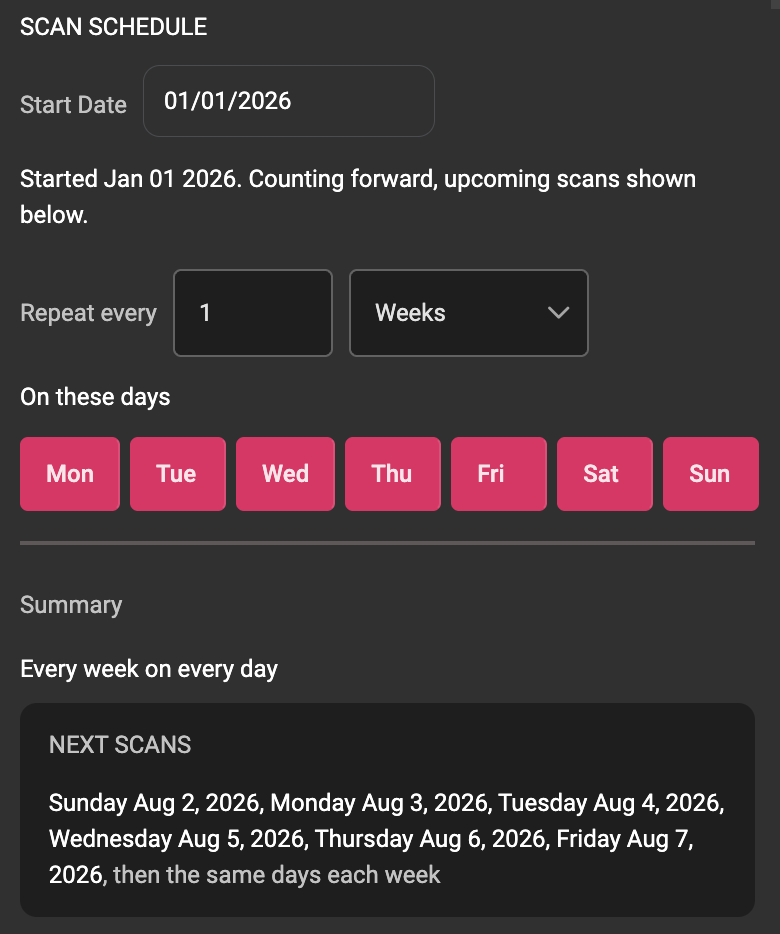
A schedule is now made of a start date and a repeat rule. Pick an interval and a unit, and the schedule follows:
As you build the rule, a plain-language summary describes it back to you and a Next Scans preview lists the upcoming scan dates, so you can confirm the schedule does what you meant before saving. The target card and overview show the schedule summary as well.
Existing targets carry over automatically as a weekly schedule on their currently selected days, so nothing changes for you unless you decide to change it.
You can now like comments on timelines. A small thing, but it lets your team acknowledge an update without adding another comment to the thread.
Vectors and assets can now be sorted in ascending or descending order, so you can flip a view to see the oldest, the newest, the highest, or the lowest first.

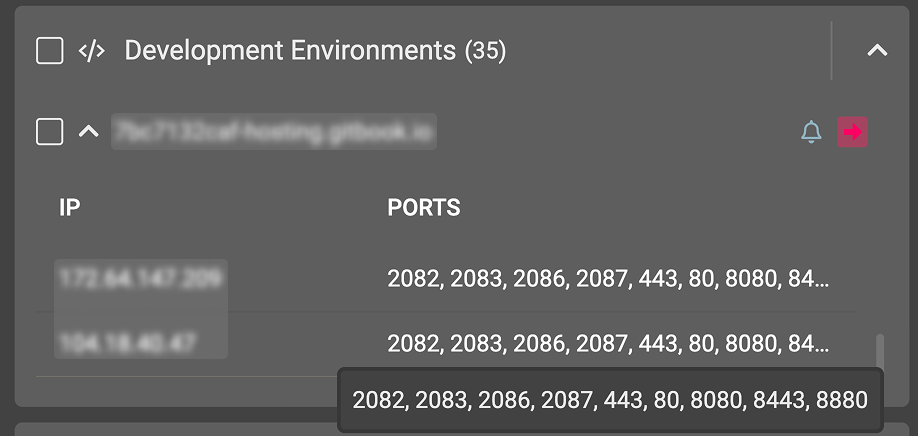
A new table in Discovery shows IPs and ports, giving you a clearer view of the network side of your discovered surface alongside domains and assets.
The assets endpoint now supports the same filters as the Asset Management screen, so anything you can narrow down in the platform you can narrow down through the API. To carry those filters, the endpoint now accepts POST, with the filters passed in the request body. The existing GET route still works, so nothing breaks if you leave your integration as it is. Switch to POST when you want to filter.
Filters combine with AND, so each one you add narrows the result further. A question that used to mean pulling every asset and filtering it yourself now fits in a single call:
The full filter list is in the API documentation. The response also carries two new fields, remediated and last_remediated_date, so you can report on remediation without pulling vector data separately.
